Dentilink AI — Auto Zalo replies, no-show prediction, treatment plan suggestions · dentilink.cc
\beginproof $n_7 \equiv 1 \pmod7$ and $n_7 \mid 8$, so $n_7=1$ or $8$. If $n_7=1$, the Sylow $7$-subgroup is normal. If $n_7=8$, then $8(7-1)=48$ elements of order $7$. The remaining $56-48=8$ elements form the Sylow $2$-subgroups; each Sylow $2$-subgroup has order $8$. But then $n_2 \mid 7$ and $n_2\equiv 1 \pmod2$, so $n_2=1$ or $7$. $n_2=1$ gives a normal subgroup. $n_2=7$ gives $7$ subgroups of order $8$, each containing identity, total elements $7\cdot 7 +1$? Let's check carefully: the intersection of distinct Sylow $2$-subgroups can be large; but a standard argument: if $n_7=8$, then the normalizer of a Sylow $7$ has index $8$, so $|N_G(P_7)|=7$. But $P_7$ is cyclic of order $7$, so $N_G(P_7)$ contains $P_7$ and possibly an element of order $2$ (since $56/7=8$, the normalizer size is $7$ or $56$; if $n_7=8$, then $|N_G(P_7)|=7$, so no element of order $2$ normalizes $P_7$, contradiction to counting). Thus $n_7$ cannot be $8$. Hence $n_7=1$, so $G$ not simple. \endproof
Wait, maybe the user isn't asking for the solutions themselves, but how to create a solution manual for Chapter 4 using Overleaf. So perhaps guide them on setting up a Overleaf project with solutions, using specific packages, formatting tips, etc. Maybe including LaTeX templates with sections for each problem. dummit+and+foote+solutions+chapter+4+overleaf+full
\subsectionA Subsection More content.
To create a professional solution manual, begin with this minimal Overleaf template: \beginproof $n_7 \equiv 1 \pmod7$ and $n_7 \mid
Before diving into solutions, let's understand the landscape. Chapter 4 is structured as follows: $n_2=7$ gives $7$ subgroups of order $8$, each
If written proofs are difficult to follow, there are video series dedicated to solving these exact problems. For example, the For Your Math YouTube channel has a playlist specifically for , walking through the logic step-by-step. Dummit and Foote Chapter 2 Solutions - Overleaf

comprehensive clinical tool
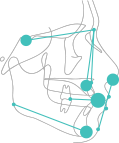
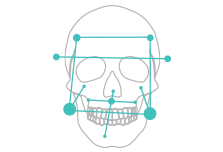
Leveraging Viceph's proprietary A.I model to detect landmarks automatically, simulate treatment results (VTO), superimpose profiles, and more...

end-to-end data encryption
The patient's medical record is securely encrypted to ensure no one, including Viceph, can access it

evidence-based tool
All features in Viceph are backed by scientific evidence

educational tool
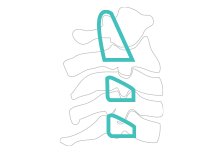
Learning cephalometric analysis is made easier with detailed explanations of landmarks, indicators, and analysis results
New product by MedbrainDentilink connects seamlessly with ViCeph — manage your clinic and run cephalometric analysis all within one ecosystem.
Patient Sync
Patients from Dentilink are automatically created and synced into ViCeph.
folder_sharedAuto Records
Full orthodontic records are created automatically when a new patient is registered.
event_availableSchedule from Dentilink
Imaging appointments are created in ViCeph directly from the Dentilink interface.
 New product by Medbrain
Browser-based CBCT review — import GALILEOS, OneVolume or DICOM; linked MPR axial/sagittal/coronal with 3D preview; account scan library and QR sharing.
Local Import
Open GALILEOS, OneVolume or DICOM folders directly in the browser — no software install needed.
MPR & 3D Preview
Linked axial, sagittal, coronal navigation with 3D volume preview and window/level controls.
Save & Share
Save scans to your account, generate public links or QR codes to share with patients or colleagues.