Dentilink AI — Auto Zalo replies, no-show prediction, treatment plan suggestions · dentilink.cc
The narrative takes a turn when Arthur meets (Carol Duarte), a Brazilian singer and migrant worker living in a shantytown nearby who bears a striking resemblance to the lost Beniamina. Italia challenges Arthur's obsession with the past. She is vibrant, alive, and struggling for a future, contrasting sharply with Arthur's morbid desire to stay buried in history.
A spiritual quest for the soul of his lost fiancée and a connection to the afterlife.
Whether through Arthur’s hunt for artifacts or Antonia’s struggle against the Inquisition, La Chimera serves as a recurring title for stories about , or that perhaps should remain untouched. Portal de Revistas da USPhttps://revistas.usp.br La Chimera di Dino Campana e Altre Chimere La Chimera
The film never preaches. Instead, it presents a magical realism where the dead have agency. In a stunning final act, the artifacts literally revolt. They cannot be possessed. They can only be borrowed, and eventually, they will return to the earth—or pull you down with them.
The film subtly critiques the exploitation of cultural heritage. Wealthy collectors buy stolen goods, while the poor diggers risk prison. Simultaneously, the film highlights the struggle of migrant workers (Italia) who are marginalized by society, drawing a parallel between the "buried" ancient artifacts and the "buried" living people society ignores. The narrative takes a turn when Arthur meets
Deep in the heart of Tuscany, Italy, lies a fascinating archaeological site that has captivated the imagination of historians and enthusiasts alike - La Chimera. This ancient Etruscan tomb, dating back to the 5th century BCE, is a remarkable example of the rich cultural heritage of the Etruscan civilization.
The climax of the film is a surreal, mystical journey. During a final heist, the tomb collapses, trapping the group. In this liminal space between life and death, Arthur finally lets go of his grief. He accepts that Beniamina is gone and that he must choose life. A spiritual quest for the soul of his
La Chimera (2023), directed by Alice Rohrwacher, is a moody, lyrical drama that blends archaeology, romance, and existential yearning into a quietly mesmerizing portrait of dislocation and reconstruction. Set in the Italian countryside near Rome, the film follows a young Englishman named Arthur (played by Josh O’Connor) who drifts through a life of aimless labor and furtive treasure-hunting, gradually surrendering to the fragile possibility of connection and meaning.

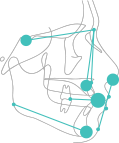
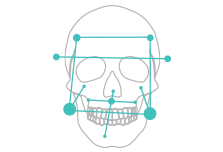
comprehensive clinical tool
Leveraging Viceph's proprietary A.I model to detect landmarks automatically, simulate treatment results (VTO), superimpose profiles, and more...

end-to-end data encryption
The patient's medical record is securely encrypted to ensure no one, including Viceph, can access it

evidence-based tool
All features in Viceph are backed by scientific evidence

educational tool
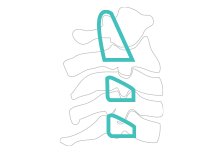
Learning cephalometric analysis is made easier with detailed explanations of landmarks, indicators, and analysis results
New product by MedbrainDentilink connects seamlessly with ViCeph — manage your clinic and run cephalometric analysis all within one ecosystem.
Patient Sync
Patients from Dentilink are automatically created and synced into ViCeph.
folder_sharedAuto Records
Full orthodontic records are created automatically when a new patient is registered.
event_availableSchedule from Dentilink
Imaging appointments are created in ViCeph directly from the Dentilink interface.
 New product by Medbrain
Browser-based CBCT review — import GALILEOS, OneVolume or DICOM; linked MPR axial/sagittal/coronal with 3D preview; account scan library and QR sharing.
Local Import
Open GALILEOS, OneVolume or DICOM folders directly in the browser — no software install needed.
MPR & 3D Preview
Linked axial, sagittal, coronal navigation with 3D volume preview and window/level controls.
Save & Share
Save scans to your account, generate public links or QR codes to share with patients or colleagues.